

In the hustle and bustle of today’s modern society, the rate of people getting obese is increasing rapidly. It is one of the most widespread issues of today’s world, occurring in people of all ages and social backgrounds. The abundance of information on weight issues has raised awareness about the major causes of weight gain. Yet, till now, people know that improper nutrition, sedentary lifestyle, stress, and genetic predisposition lead to obesity. There is another reason that might be underestimated – a lack of vitamin D.
The “sunshine vitamin” is one of the key ingredients necessary for the development of strong bones, a functional immune system, proper hormone production and metabolism. The latest studies leads the experts to believe that lacking this vitamin boosts obesity.
Although vitamin D deficiency by itself cannot cause obesity, it can still become a contributory factor to gaining weight. Dr. Sardar Imran Sher Qaisrani from Slimmers is an accomplished specialist who creates effective personalized programs to help people manage their weight. He focuses on the real reason for your problem and thus develops an appropriate treatment strategy accordingly.
In this blog we will focus on the function of vitamin D and its importance in relation to obesity.
Many vitamins do a great deal of work to keep your body working well all throughout the day. Among such vitamins, there is one vitamin, the importance of which cannot be overlooked, “vitamin D”. It is a fat-soluble vitamin which promotes calcium absorption in the body along with phosphorus. Thus, maintaining healthy bones and muscles. Sunlight therapy for natural weight loss is also gaining attention due to the role of vitamin D in overall health and metabolism. Though it is widely available, the deficiency of vitamin D is very common all over the world. People who lead an indoor life, who are dark-skinned, obese, and follow unhealthy eating patterns, are the ones who lack this vitamin the most.
There are three major sources of obtaining vitamin D:
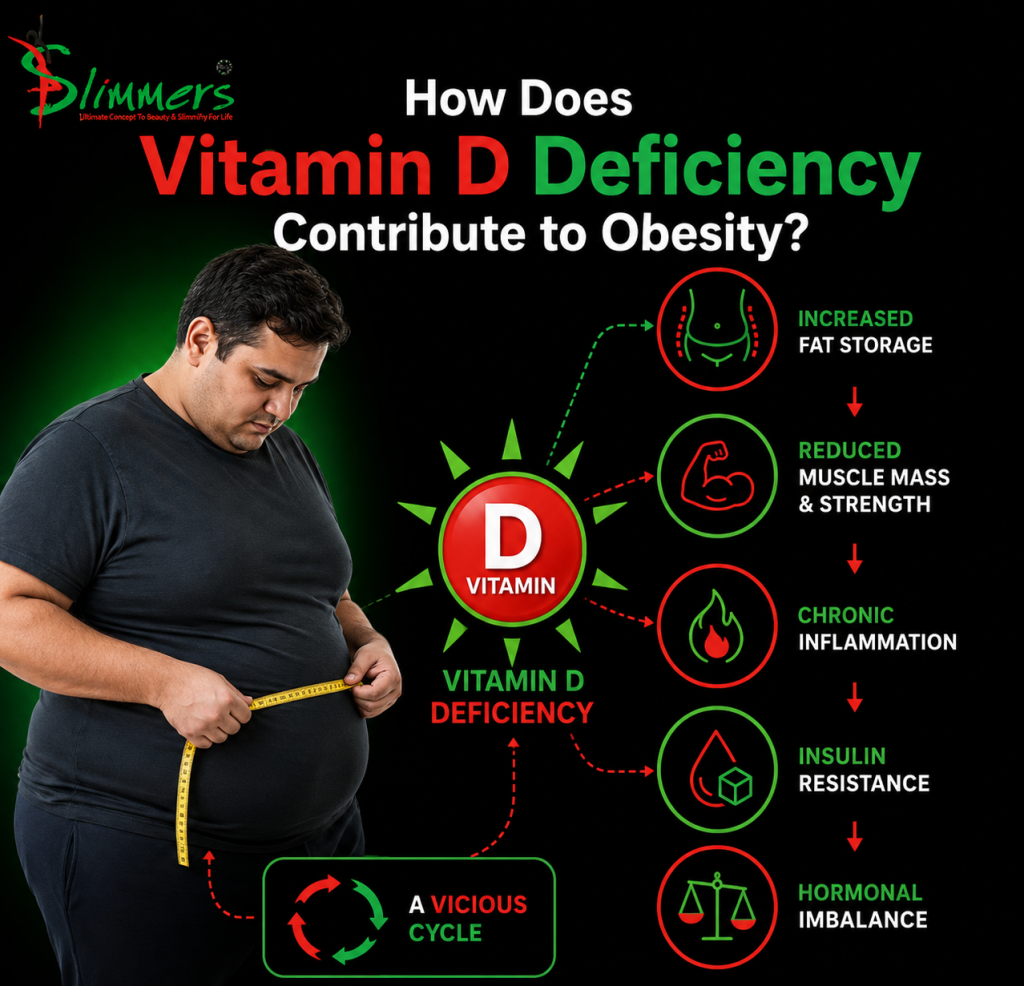
Researchers and experts agree that obesity and vitamin D deficiency are often connected. People with obesity commonly have low vitamin D levels, and those with low vitamin D may gain weight more easily and struggle to lose it. It creates a cycle where both conditions can worsen each other, making it harder to maintain a healthy weight.
It may seem surprising, but a simple vitamin deficiency can meaningfully contribute to weight gain. But it’s a fact that the contribution of lower levels of vitamin D to weight gain is notable. The following impacts of the sunshine vitamin can help you better understand the fact.
Metabolic activities are foundational to weight maintenance. It is the body's efficiency in calorie burning and fat processing. Based on some research findings, vitamin D receptors have been found in muscles and fat tissues, implying that vitamin D controls metabolism. If the levels of vitamin D are low, metabolic activities are slowed, hence raising the chances of developing obesity.
Anyone overweight always has excessive fat in different body parts. The body stores fat under the direction of certain hormones. Vitamin D deficiency may significantly affect the equilibrium of these hormones. A primary impact of lacking this vitamin is higher levels of parathyroid hormone (PTH), which may encourage the body to store more fat and reduce fat breakdown. Moreover, this elevation can also interfere with normal metabolic activity. Additionally, because vitamin D is fat-soluble, excess body fat tissues trap it. In turn, the amount of active vitamin D available in circulation further reduces, worsening the deficiency.
Hormones that majorly make a person obese are not out of impact of vitamin D deficiency. Below is a brief overview of the key hormonal effects:
The condition where the body ceases its reaction to insulin is known as “Insulin Resistance.” This often occurs in individuals who do not have sufficient levels of Vitamin D. Consequently, there is high blood glucose, and more fat accumulation in the abdominal region occurs.
Leptin is the hormone that signals fullness and suppresses appetite. Inadequate vitamin D interferes with its function and thus promotes hunger and, consequently, obesity.
A stressed person is more susceptible to gaining weight. The secretion of cortisol multiplies in the absence of an appropriate amount of vitamin D. Excess cortisol leads to emotional eating and also interferes with other hormonal balances.
Vitamin D-deficient patients experience
All the above-mentioned issues can reduce physical activity levels. Hence, maintaining an active lifestyle becomes tough. In turn, it can contribute to weight gain and obesity over time.
Irregular sleep patterns or poor sleep quality directly impair immunity, increases stress and thus invites obesity. Poor sleep strongly affects hunger hormones like ghrelin and leptin. Inadequate sleep increases cravings for high-calorie foods and reduces energy expenditure. All are evident reasons to become bulky.
Vitamin D is an anti-inflammatory substance that regulates immunity. If there is insufficient vitamin D, then the level of inflammation rises. This, in turn, impairs metabolic function and exacerbates obesity-related problems. Also, inflammation affects insulin resistance and fat deposition.
Identifying vitamin D deficiency can be challenging, as it shares common symptoms with numerous other ailments or even seems coincidental.
One should get a blood test if they notice any of the following signs:
Researchers and experts agree that obesity and vitamin D deficiency are often connected. People with obesity commonly have low vitamin D levels, and those with low vitamin D may gain weight more easily and struggle to lose it. It creates a cycle where both conditions can worsen each other, making it harder to maintain a healthy weight.
People know vitamin D as the “sunshine vitamin” because sunlight is its biggest source. Yet, moderation and safety measures are crucial when considering Weight loss through sun exposure. Spending 15–30 minutes in sunlight several times a week may help boost vitamin D production. Morning sunlight is generally considered safer and more beneficial.
Foods rich in vitamin D include:
Those suffering from a notable deficiency may need to use vitamin D supplements. But this should never be done on one’s own. Always consult a medical expert to avoid any adverse effects, such as vitamin D toxicity.
Small daily habits can make a significant difference over time. On a daily basis, going with healthy habits can make a difference. Be cautious about your nutrition, regular physical activity, stress management, and good sleep habits. All will support healthy metabolism and vitamin balance.
Obesity is usually linked to exercise and diet, but vitamin deficiencies can also play a role. Low vitamin D levels may contribute to weight gain by affecting metabolism, hormones, energy, and inflammation in the body. At the same time, obesity itself can worsen vitamin D deficiency by reducing the vitamin’s availability in the body. It creates a cycle that may negatively impact overall health and long-term wellness.
Dr. Sardar Imran Sher Qaisrani is among the pioneers of using natural body tendencies for obesity treatment. His clinical judgments and personalized care in obesity treatment through sunlight exposure help patients to identify the root cause of their sufferings. Following the guidelines of such an expert and adopting the ways to improve your vitamin D deficiency could lead to lasting health benefits.

Now please enter your name and phone number to get free consultation
WhatsApp us