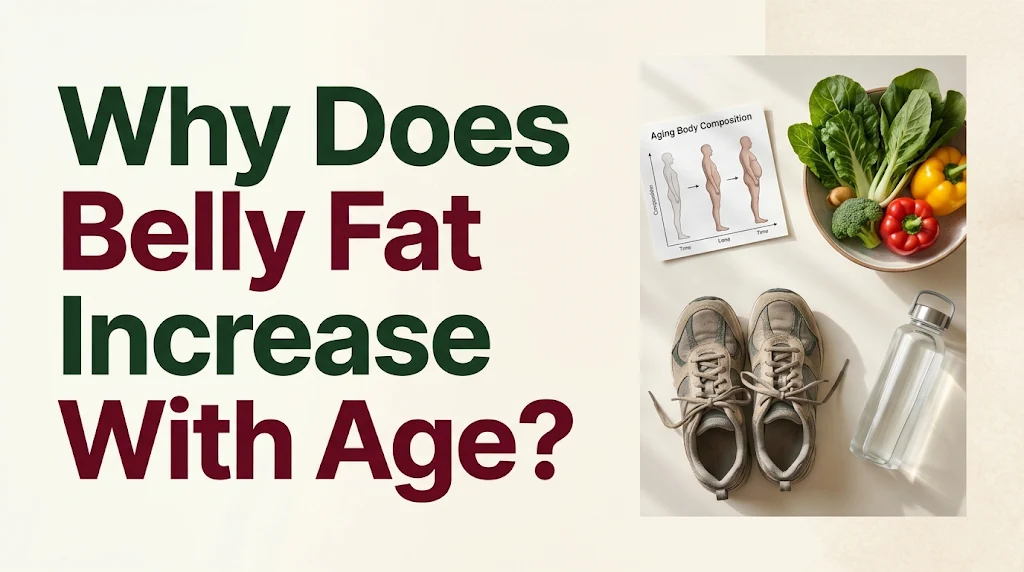
Getting older brings several changes to your body. Your muscle mass may decrease, hormone levels can change and your daily activity may become lower. These factors can influence how your body uses energy and where it stores extra fat.
For some people, weight gain happens gradually. For others, the biggest change is not their overall weight but the amount of fat collecting around their stomach.
The important thing to understand is that abdominal weight gain is not simply a normal part of getting older that you cannot control. Although you cannot stop every age-related change, you can improve your eating habits, maintain muscle and stay physically active.
1. Why Does Belly Fat Increase With Age?
As you get older, your body composition naturally changes. Body composition refers to the amount of muscle, fat, bone and other tissues in your body.
Younger adults generally have more muscle mass and may be more physically active. However, muscle tissue can gradually decrease with age, particularly when someone does not exercise regularly.
This matters because muscle helps your body use energy. When you lose muscle, your daily calorie requirements may decrease.
For example, imagine someone who used to walk regularly and participate in sports but now spends most of the day sitting. If their food portions remain the same while their activity decreases, they may gradually gain weight.
Hormonal changes can also affect fat distribution. Women may notice more abdominal fat during menopause, while men can experience changes in muscle mass and body composition as they age.
Genetics, sleep quality, stress and eating habits can contribute as well.
This means there is rarely one single explanation. Several small changes can work together and gradually affect your waistline.
2. 7 Common Reasons Belly Fat Increases With Age
Understanding what contributes to abdominal weight gain can help you identify which areas of your lifestyle may need attention.
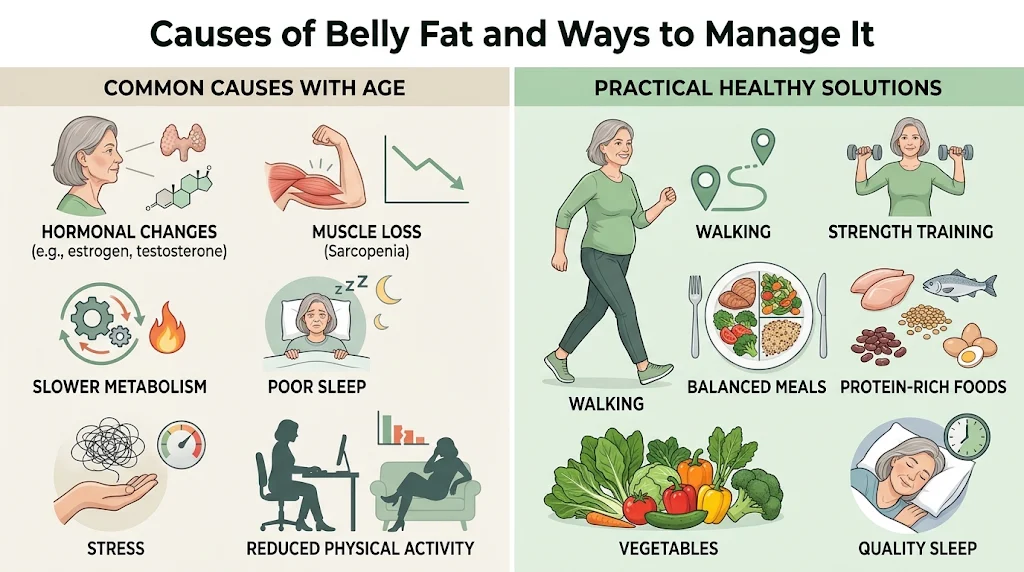
1. Loss of Muscle Mass
One important reason for age-related weight gain is the gradual loss of muscle tissue.
This process is known as sarcopenia. It can begin during adulthood and may become more noticeable as people get older.
Muscles help you perform everyday activities such as walking, climbing stairs, carrying groceries and getting out of a chair.
They also use energy throughout the day. When muscle mass decreases, your body may burn fewer calories than it previously did.
This can make maintaining your previous weight more difficult.
For example, someone who used to perform physical work may develop a more sedentary routine after changing jobs or retiring. Without regular exercise, muscle strength and mass may gradually decline.
What can help?
- Include strength training in your weekly routine.
- Try squats, wall push-ups and resistance band exercises.
- Eat enough protein to support muscle maintenance.
- Avoid spending long periods sitting without movement.
Maintaining muscle is important not only for managing weight but also for keeping your body strong and independent as you age.
2. Hormonal Changes
Hormones influence many processes in your body, including appetite, energy use and fat storage.
As you get older, your hormone levels can change. These changes may influence where your body stores fat.
For women, menopause is an important stage. Estrogen levels decline during this period, and fat distribution may shift towards the abdomen instead of the hips and thighs.
Some women also experience sleep disturbances, hot flashes and changes in mood. These symptoms can make it harder to maintain regular exercise and healthy eating habits.
Men can also experience gradual hormonal changes. Testosterone levels may decline with age, which can contribute to reduced muscle mass and changes in body composition.
However, hormonal changes do not automatically cause weight gain. Genetics, physical activity, food choices and other health factors also matter.
What can help?
- Maintain a balanced eating routine.
- Include regular physical activity.
- Perform exercises that help maintain muscle.
- Prioritise sleep and stress management.
- Discuss unusual hormonal symptoms with a healthcare professional.
Avoid using hormone products or supplements without proper medical advice.
3. Changes in Metabolism
Metabolism refers to the chemical processes your body uses to produce and use energy.
Many people believe that metabolism suddenly becomes slow after a certain age. In reality, changes in muscle mass, activity levels and body composition can gradually influence how much energy your body needs.
For example, someone who was physically active in their twenties may need fewer calories in their fifties if they now spend most of the day sitting.
If their eating habits remain unchanged, the extra energy may contribute to gradual weight gain.
This is one reason why the same eating routine may not work equally well at every stage of life.
What can help?
- Stay active throughout the day.
- Include strength exercises to maintain muscle.
- Choose nutritious foods that provide enough energy.
- Pay attention to portion sizes.
- Avoid extreme calorie restriction.
The goal is to support your body’s changing needs rather than follow an unnecessarily strict diet.
4. Poor Sleep Quality
Sleep is closely connected to your overall health and weight-management habits.
Unfortunately, many adults experience changes in their sleeping patterns as they get older.
Work responsibilities, family concerns, stress, discomfort and hormonal changes can all affect sleep quality.
When you regularly sleep poorly, the hormones involved in appetite regulation may be affected. You may feel hungrier, experience more food cravings or find it harder to control your portions.
Lack of sleep can also reduce your energy. As a result, you may avoid exercise and choose convenient foods instead of preparing balanced meals.
What can help?
- Aim for seven to nine hours of sleep when possible.
- Follow a consistent bedtime routine.
- Reduce screen use before going to bed.
- Avoid heavy meals close to bedtime.
- Keep your sleeping environment comfortable and quiet.
If sleep problems continue despite improving your routine, speak with a healthcare professional.
5. Increased Stress Levels
Stress can influence your eating habits, sleep and physical activity.
As people get older, responsibilities may increase. Managing work, family, finances and personal commitments can create ongoing pressure.
During stressful situations, your body releases cortisol, a hormone that helps it respond to challenges.
Long-term stress can affect appetite and encourage emotional eating. Some people turn to sugary snacks, fast food or large meals when they feel overwhelmed.
Stress may also make it harder to maintain a regular exercise routine.
For example, someone dealing with work pressure may spend more time sitting, sleep fewer hours and depend on convenient meals.
Over time, these habits can contribute to weight gain.
What can help?
- Take short breaks during busy days.
- Try walking outdoors.
- Practice deep breathing.
- Spend time with family and friends.
- Make time for hobbies and relaxing activities.
Managing stress is an important part of maintaining a healthy lifestyle.
6. Reduced Physical Activity
Your daily routine may become less active as you get older.
You might spend more time driving, working at a desk, watching television or managing household responsibilities.
These activities can reduce the amount of movement you get throughout the day.
When you move less, your body uses less energy. If you continue eating the same amount without adjusting your activity, gradual weight gain may occur.
Some people also avoid exercise because they believe physical activity is too difficult after a certain age.
However, regular movement remains important throughout adulthood.
What can help?
- Walk for 20 to 30 minutes on most days.
- Take short movement breaks during work.
- Use stairs when comfortable.
- Try cycling, swimming or dancing.
- Include simple strength exercises.
Choose activities that match your fitness level and physical abilities. You do not need an expensive gym membership to become more active.
7. Unhealthy Eating Habits
Your food choices can influence how much fat your body stores.
As people get older, their eating routines may change. Busy schedules, emotional stress and convenience can encourage frequent consumption of processed foods and sugary snacks.
These foods can contain large amounts of calories without providing enough fibre or protein to keep you satisfied.
Another common problem is continuing to eat the same portions even when daily activity has decreased.
For example, someone who previously worked an active job may continue eating large meals after moving to a desk-based routine.
Over time, this difference between energy intake and energy use can contribute to weight gain.
What can help?
- Include vegetables and fruits in your meals.
- Choose whole grains more often.
- Eat protein-rich foods such as eggs, fish, chicken and lentils.
- Reduce frequent sugary drinks and processed snacks.
- Pay attention to portion sizes.
You do not need to remove all your favourite foods. Focus on balanced meals and eating habits that you can maintain.
3. Why Is Belly Fat More Noticeable After 40?
Many people begin noticing changes in their waistline during their forties and fifties.
This happens because several age-related changes may occur around the same period.
Muscle mass may gradually decrease, physical activity may become lower and hormonal changes can influence body composition.
Women may notice a more noticeable change during perimenopause and menopause. Declining estrogen levels can influence how fat is distributed around the body.
Men may also experience changes in muscle mass and body composition as testosterone levels gradually change.
Another important factor is lifestyle. Work responsibilities, family commitments and changes in daily routines can leave less time for exercise and meal preparation.
However, reaching 40 does not mean abdominal weight gain is unavoidable.
Maintaining muscle, eating balanced meals and staying active can help you manage these changes.
4. Visceral Fat vs Subcutaneous Fat: Understanding the Difference
Not all abdominal fat is the same. There are two main types that are important to understand.
Subcutaneous Fat
Subcutaneous fat is stored directly underneath your skin.
It is the soft layer of fat that you can usually pinch around your stomach, hips and thighs.
This fat provides insulation and helps protect your body. However, having excessive body fat can still affect your health.
Visceral Fat
Visceral fat is stored deeper inside your abdomen, surrounding important organs such as the liver and intestines.
Unlike subcutaneous fat, you cannot easily pinch this type of fat with your fingers.
Excess visceral fat is associated with several health concerns, including:
- Type 2 diabetes.
- High blood pressure.
- Heart disease.
- Insulin resistance.
- Unhealthy blood fat levels.
This is why abdominal fat is not only an appearance-related concern. Its location can also influence your long-term health.
Maintaining a healthy waist measurement and following healthy lifestyle habits can help reduce the risks associated with excess abdominal fat.
5. 8 Practical Ways to Manage Belly Fat as You Age
You cannot control every biological change that happens with age, but you can improve many lifestyle factors that influence your weight.
Here are some practical steps you can begin following.
1. Eat More Protein
Protein helps maintain muscle tissue and supports recovery after exercise.
It can also help you feel satisfied after meals, which may make it easier to manage unnecessary snacking.
Good protein sources include:
- Eggs.
- Chicken.
- Fish.
- Milk and yoghurt.
- Lentils and beans.
- Nuts and seeds.
Try to include a protein source in your main meals.
2. Increase Your Fibre Intake
Fibre supports digestion and helps you feel full for longer.
It is found in many plant-based foods and can also support healthy blood sugar levels.
Include foods such as oats, apples, pears, broccoli, carrots, beans and whole grains.
If you currently eat very little fibre, increase your intake gradually and drink enough water.
3. Include Strength Training
Strength training is especially useful as you get older because it helps maintain muscle mass and strength.
You do not need to lift heavy weights to get started.
Try simple exercises such as:
- Squats.
- Wall push-ups.
- Light dumbbell exercises.
- Resistance band movements.
- Chair exercises.
Start slowly and increase the difficulty as your strength improves.
If you have joint problems or other health concerns, ask a healthcare professional which exercises are suitable for you.
4. Walk Regularly
Walking is an easy way to increase your daily physical activity.
It supports heart health, improves fitness and helps your body use energy.
You can start with a short walk after breakfast or dinner. Gradually increase the duration according to your comfort and fitness level.
Regular walking combined with balanced eating can support overall weight management.
5. Reduce Sugary Drinks
Soft drinks, sweetened juices and sugary tea or coffee can add extra calories to your daily routine.
Because liquid calories may not keep you full for long, frequent sugary drinks can make it easier to consume more energy than you need.
Try replacing them with plain water, unsweetened tea or other drinks without added sugar.
Small changes can make your eating routine healthier without making it difficult to follow.
6. Improve Your Sleep Routine
Good sleep supports appetite regulation, energy and general well-being.
Try going to bed and waking up at approximately the same time each day.
Avoid using your phone immediately before bedtime and create a relaxing nighttime routine.
Better sleep can also make it easier to stay active and follow healthier eating habits.
7. Manage Everyday Stress
Stress can make it harder to maintain healthy habits.
Find activities that help you relax and feel refreshed.
You might enjoy gardening, reading, walking, spending time with friends or practising meditation.
Even a few minutes of relaxation during a busy day can help you manage everyday pressure.
8. Stay Consistent With Healthy Habits
One common mistake is expecting quick results.
People may follow a strict diet for a few days, exercise intensely and become disappointed when they do not see immediate changes.
Instead, focus on habits you can maintain for months and years.
Eat balanced meals, move regularly, get enough sleep and monitor your progress.
Consistency is more valuable than following an extreme routine for a short period.
6. Common Mistakes That Make Abdominal Fat Harder to Manage
Even when people try to improve their health, certain habits can make progress more difficult.
Here are some mistakes worth avoiding.
Skipping meals: Missing meals can leave you extremely hungry later and may encourage overeating.
Doing only abdominal exercises: Crunches and sit-ups strengthen your abdominal muscles but cannot specifically burn fat from your stomach.
Following crash diets: Extremely restrictive diets can be difficult to maintain and may lead to muscle loss.
Ignoring strength training: Focusing only on cardio means missing the benefits of maintaining muscle strength.
Expecting immediate results: Changes in body composition take time. Comparing your progress with other people can create unnecessary frustration.
A balanced approach that includes nutrition, exercise and adequate rest is more practical than looking for a quick solution.
7. When Should You Be Concerned About Increasing Belly Fat?
Some changes in body shape are common with age. However, a growing waistline can sometimes indicate an increased risk of health problems.
Excess abdominal fat is associated with conditions such as type 2 diabetes, high blood pressure and cardiovascular disease.
It is worth speaking with a healthcare professional if:
- Your waist measurement continues to increase.
- You gain weight without an obvious reason.
- You experience unusual tiredness or other unexplained symptoms.
- You have concerns about your blood sugar or blood pressure.
- Your abdomen suddenly becomes swollen or painful.
A healthcare professional can assess your overall health and recommend suitable tests if needed.
It is also important to remember that a larger stomach is not always caused by body fat. Bloating, digestive problems and certain medical conditions can also affect the appearance of your abdomen.
Do not ignore sudden or unexplained abdominal swelling, particularly if it comes with pain or other concerning symptoms.
Final Thoughts
Getting older brings natural changes to your body, but gaining excess abdominal fat is not something you have to ignore.
Changes in hormones, muscle mass, metabolism, sleep and physical activity can all influence your waistline. Understanding these factors can help you make better decisions about your health.
Start with simple steps. Eat balanced meals, include protein and fibre, walk regularly and add strength training to your routine. Give yourself enough time to develop habits that you can maintain.
If you need additional guidance on healthy weight management, you can explore Dr Sardar Imran Sher Qaisrani and Slimmers Pakistan for related health and weight-management information.
Remember that healthy weight management is not about achieving a perfect body. It is about improving your strength, supporting your overall health and feeling better as you get older.